Las zonas urbanas de todo el mundo están experimentando un aumento de las temperaturas debido al rápido desarrollo y al mayor uso de superficies de hormigón, asfalto y metal. Este fenómeno se conoce como el efecto isla de calor urbana (ICU), por el cual las ciudades se vuelven significativamente más cálidas que las zonas rurales circundantes.
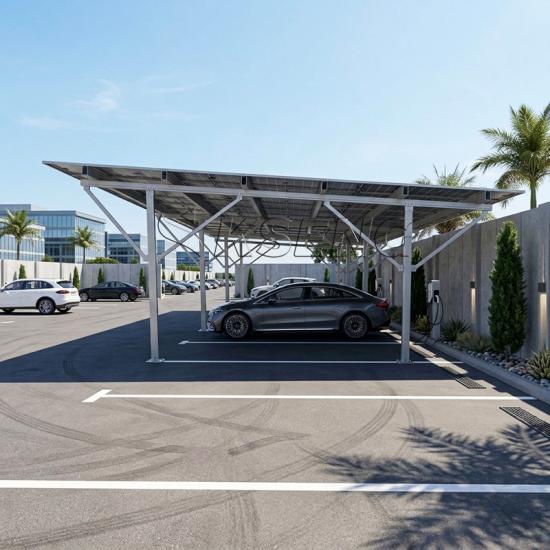
Una solución eficaz y cada vez más popular a este problema es el uso de marquesinas solares. Además de generar energía limpia, las marquesinas solares desempeñan un papel importante en la reducción de la acumulación de calor superficial en las zonas de aparcamiento y en la mejora de los microclimas urbanos.
¿Qué es el efecto isla de calor urbano?
El efecto de isla de calor urbana se produce cuando el suelo natural se sustituye por materiales que absorben el calor, como por ejemplo:
● Carreteras asfaltadas
● Estacionamientos de concreto
● Construir azoteas● Infraestructura metálica
Estos materiales absorben y retienen el calor durante el día y lo liberan lentamente por la noche, lo que provoca temperaturas generales más elevadas en las ciudades.
Entre los principales impactos se incluyen:
● Mayor consumo de energía para refrigeración.
● Menor comodidad al aire libre
● Niveles más altos de contaminación del aire● Efectos negativos sobre el medio ambiente y la salud.
Cómo los cobertizos solares para coches ayudan a reducir la acumulación de calor
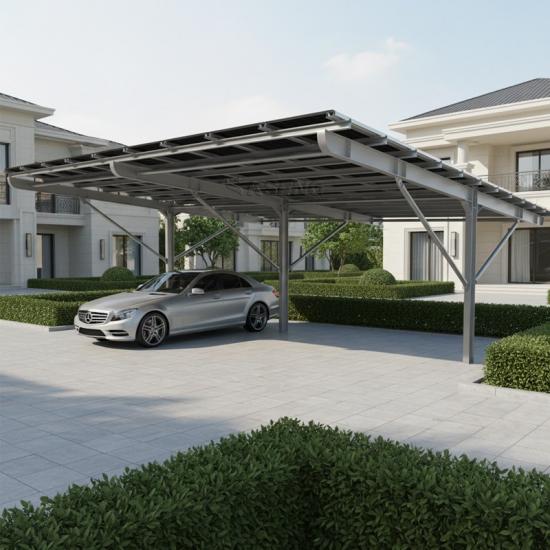
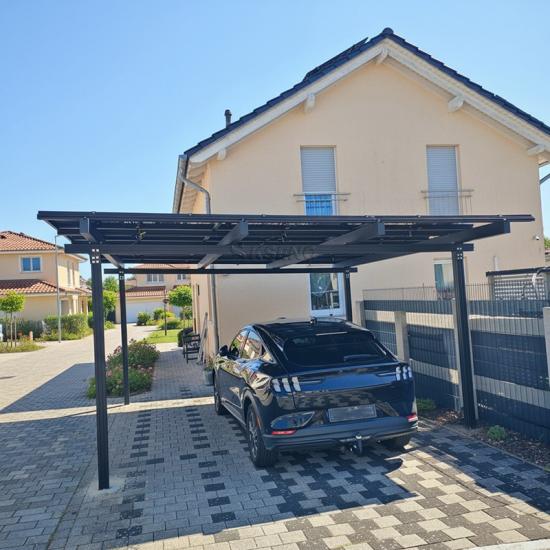
Los sistemas de montaje de marquesinas solares proporcionan sombra física sobre las zonas de aparcamiento. Este sencillo cambio de diseño reduce significativamente la exposición directa a la luz solar sobre las superficies pavimentadas.
Los efectos principales incluyen:
● Menor temperatura superficial del asfalto y del hormigón.
● Menor absorción de calor durante el día.
● Menor radiación de calor de vuelta al aire circundante.● Mejora del confort térmico en las zonas de aparcamiento.
1. Creación de sombra sobre grandes áreas de estacionamiento
Los aparcamientos contribuyen en gran medida a la formación de islas de calor urbanas porque son superficies grandes, expuestas y de color oscuro.
Los cobertizos solares para coches crean sombra continua, lo que:
● Evita que la radiación solar directa caliente el suelo.
● Reduce significativamente las temperaturas máximas diurnas de la superficie.
● Mejora las condiciones generales del microclima.
2. Menor temperatura ambiente en las zonas circundantes
Los cobertizos solares para coches ayudan a:
● Reduzca la convección de calor del asfalto caliente.
● Minimizar la radiación térmica hacia los edificios cercanos.
● Mejorar el confort del flujo de aire a nivel peatonal.
3. Reducción de la demanda de aire acondicionado en edificios cercanos.
Las islas de calor aumentan la demanda de refrigeración en edificios comerciales y residenciales. Al disminuir las temperaturas locales, cocheras solares reducir indirectamente el consumo de energía.
Los beneficios incluyen:
● Menor consumo de electricidad para el aire acondicionado.
● Reducción de la carga máxima de energía durante las estaciones cálidas.
● Mejora del rendimiento energético de los edificios
4. Combinación de los beneficios de la generación de energía y la refrigeración.
A diferencia de las estructuras de sombra tradicionales, los cobertizos solares para coches cumplen una doble función:
● Generar electricidad renovable mediante paneles solares.
5. Mejora de la sostenibilidad urbana y la infraestructura verde.
Los aparcamientos solares se integran cada vez más en las estrategias de ciudades inteligentes y desarrollo urbano sostenible.
Contribuyen a:
● Reducción de las emisiones de carbono
● Mayor adopción de energías renovables
● Mejora de la calidad ambiental urbana● Apoyo a las certificaciones ESG y de construcción sostenible.
6. Mayor comodidad para peatones y conductores
Además de los beneficios ambientales, cocheras solares fotovoltaicas mejorar la comodidad de las personas en las zonas de aparcamiento.
Ellos proporcionan:
● Condiciones de estacionamiento más frescas en verano.
● Menor exposición al calor al entrar o salir de los vehículos.
● Mejor experiencia para los peatones en grandes aparcamientos.
7. Uso sostenible del espacio urbano existente
Una de las mayores ventajas de las marquesinas solares es que no requieren terreno adicional.
En cambio, ellos:
● Utilizar la infraestructura de estacionamiento existente.
● Evitar los impactos de los nuevos proyectos urbanísticos.
● Maximizar los beneficios energéticos y medioambientales por metro cuadrado
Esto las hace muy adecuadas para entornos urbanos densamente poblados.
Conclusión
Las marquesinas solares ofrecen una solución práctica y eficaz para reducir el efecto isla de calor urbano, a la vez que generan energía renovable. Al proporcionar sombra sobre grandes zonas de aparcamiento, disminuyen la temperatura de la superficie y del aire, mejoran la eficiencia energética y aumentan el confort urbano.
A medida que las ciudades sigan creciendo y se enfrenten a los crecientes desafíos de las temperaturas, los sistemas de marquesinas solares desempeñarán un papel cada vez más importante en la creación de entornos urbanos más frescos y sostenibles.
Teléfono : +86 0592-5795673
Correo electrónico : info@xmkseng.com
: No.1, Xinshiqiao Rd., Xiang‘an Dist., Xiamen, Fujian, China.
: 11&12F, Huixin Wealth Centre, No. 891, Fanghu North 2nd Rd., Huli Dist., Xiamen, Fujian, China.



© 2026 Xiamen Kseng Metal Tech Co Ltd.Reservados todos los derechos.
 Soporta red IPv6